
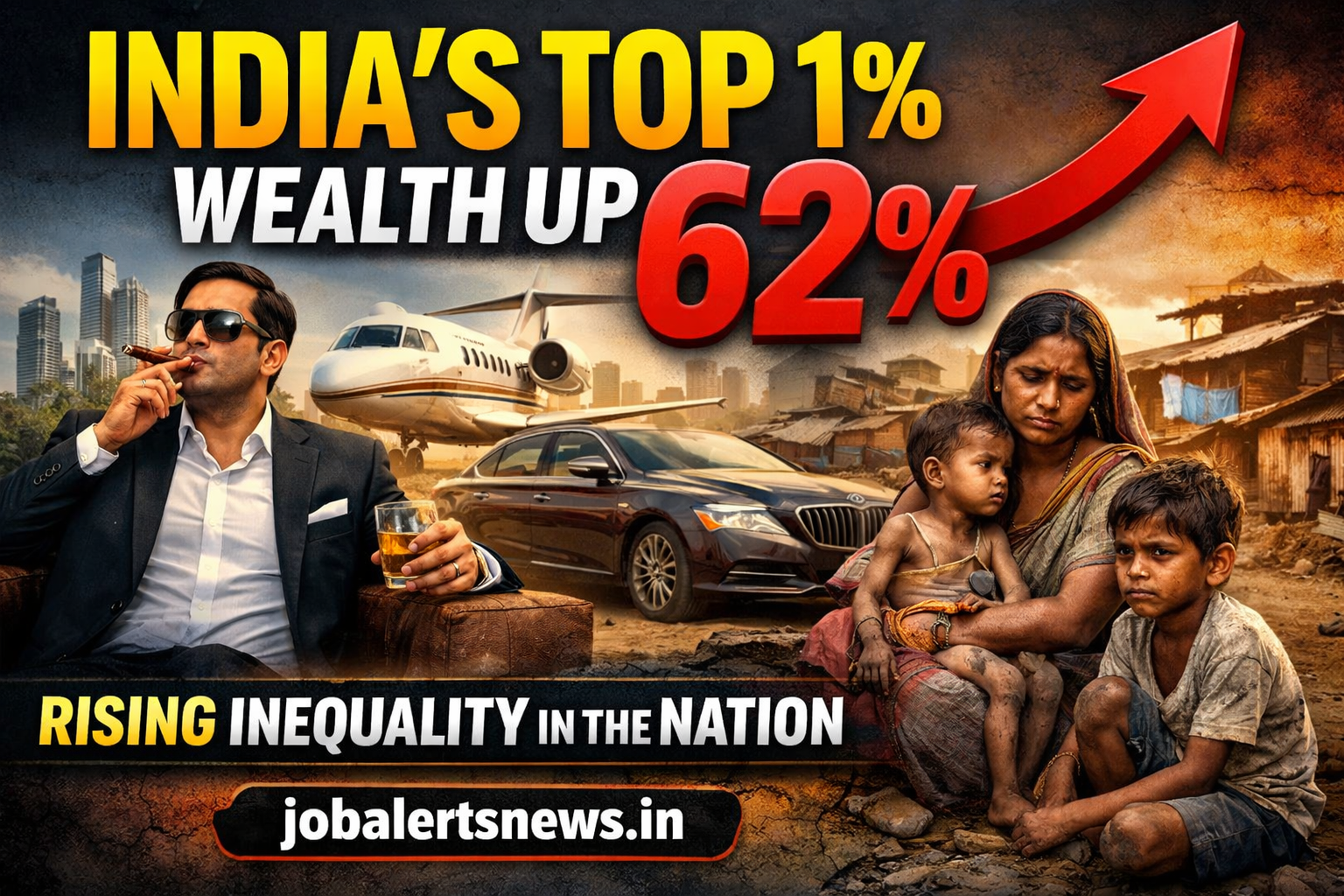
A recent G20 report has revealed a striking trend in India’s economic journey over the past two decades. According to the findings, the wealth of India’s top 1% population has grown by an impressive 62% since the year 2000. While the country has experienced rapid economic expansion, technological growth, and rising global influence, the report highlights widening wealth inequality as a critical challenge that policymakers must urgently address.
The report has sparked renewed debate about income disparity, inclusive growth, and the future of India’s middle and lower-income populations.
G20 Report Highlights Rising Wealth Concentration
The G20 report focuses on wealth distribution trends across major global economies, including India. It indicates that a significant portion of wealth creation since 2000 has been concentrated among the richest individuals.
In India’s case, the top 1% now controls a substantially larger share of national wealth compared to the early 2000s. This rise has been fueled by factors such as stock market growth, real estate appreciation, privatization, and the expansion of corporate profits.
While overall GDP growth has lifted millions out of poverty, the report suggests that wealth gains have not been evenly distributed across society.
Economic Growth vs Wealth Inequality
India’s economy has grown rapidly since liberalization, becoming one of the fastest-growing major economies in the world. However, the G20 report emphasizes that economic growth alone does not guarantee equitable wealth distribution.
The wealth of the top 1% has increased far faster than incomes of the middle class and the poor. In contrast, wage growth for informal workers, farmers, and low-income earners has remained relatively slow, especially after accounting for inflation.
This growing gap raises concerns about long-term social stability and sustainable development.
Why Has the Top 1% Gained So Much?
According to economic analysts, several structural factors have contributed to the sharp rise in wealth among India’s richest individuals:
1. Stock Market and Asset Growth
India’s equity markets have delivered strong returns over the past two decades. Wealthier individuals, who already had access to financial investments, benefited disproportionately from this growth.
2. Real Estate Boom
Urban real estate prices have surged, especially in metro cities. Property ownership among the wealthy has significantly increased their net worth.
3. Business and Corporate Expansion
The rise of large conglomerates, startups, and multinational investments has created massive wealth for business owners and early investors.
4. Tax and Policy Structures
Experts argue that indirect taxes and limited wealth taxation have allowed wealth accumulation to accelerate at the top.
Impact on Middle Class and Poor Households
While India’s top 1% prospered, the G20 report highlights challenges faced by middle-income and low-income groups. Rising costs of education, healthcare, housing, and fuel have increased financial pressure on ordinary households.
The middle class, often seen as the backbone of economic consumption, has experienced slower income growth compared to asset-owning elites. Meanwhile, millions of informal workers remain vulnerable to economic shocks, job insecurity, and limited social protection.
The report warns that unchecked inequality can weaken consumer demand and reduce overall economic resilience.
Regional and Social Disparities
The report also points out that wealth inequality in India is not just economic but also regional and social. Urban areas have seen faster income and wealth growth compared to rural regions. Similarly, access to quality education, capital, and networks continues to shape wealth outcomes.
These disparities highlight the need for targeted development policies that address regional imbalances and provide equal opportunities across social groups.
Government Response and Policy Challenges
Successive Indian governments have introduced welfare schemes, digital inclusion programs, and financial reforms to improve economic participation. Initiatives such as direct benefit transfers, rural employment programs, and startup support have helped broaden access to income opportunities.
However, the G20 report suggests that stronger policy measures may be needed to address wealth concentration. These could include progressive taxation, improved public healthcare and education, and better regulation of capital markets.
Balancing economic growth with social equity remains a major policy challenge.
Global Comparison: India and Other G20 Nations
India is not alone in experiencing rising wealth inequality. The G20 report notes similar trends in several advanced and emerging economies. However, the scale and speed of wealth growth among India’s top 1% stand out due to the country’s large population and developmental needs.
In countries with stronger social safety nets, the impact of inequality is often softened through public services and redistributive policies. The report suggests India could learn from global best practices while designing solutions suited to its unique economic structure.
Why Reducing Inequality Matters
Economists warn that extreme wealth concentration can slow long-term growth. High inequality may reduce social mobility, limit access to education, and increase political and social tensions.
The G20 report emphasizes that inclusive growth is essential for sustaining India’s development momentum. When wealth creation benefits a broader section of society, it leads to stronger domestic demand, higher productivity, and greater economic stability.
The Road Ahead for India
As India aims to become a developed economy in the coming decades, addressing wealth inequality will be crucial. The G20 report serves as a reminder that growth must be inclusive and balanced.
Investments in education, healthcare, skill development, and job creation can help bridge the gap between the richest and the rest of the population. Transparent governance and fair taxation policies can further ensure that economic progress benefits all citizens.
Conclusion
The revelation that India’s top 1% grew its wealth by 62% since 2000 underscores both the success and the challenges of the country’s economic transformation. While wealth creation has accelerated at the top, the G20 report makes it clear that reducing inequality must be a priority.
For India’s growth story to remain strong and sustainable, policymakers must focus on inclusive development that empowers every section of society, not just the wealthiest few.
[…] Employees’ State Insurance Corporation (ESIC) has officially announced the ESIC Senior Residents Recruitment 2026, inviting eligible medical […]