
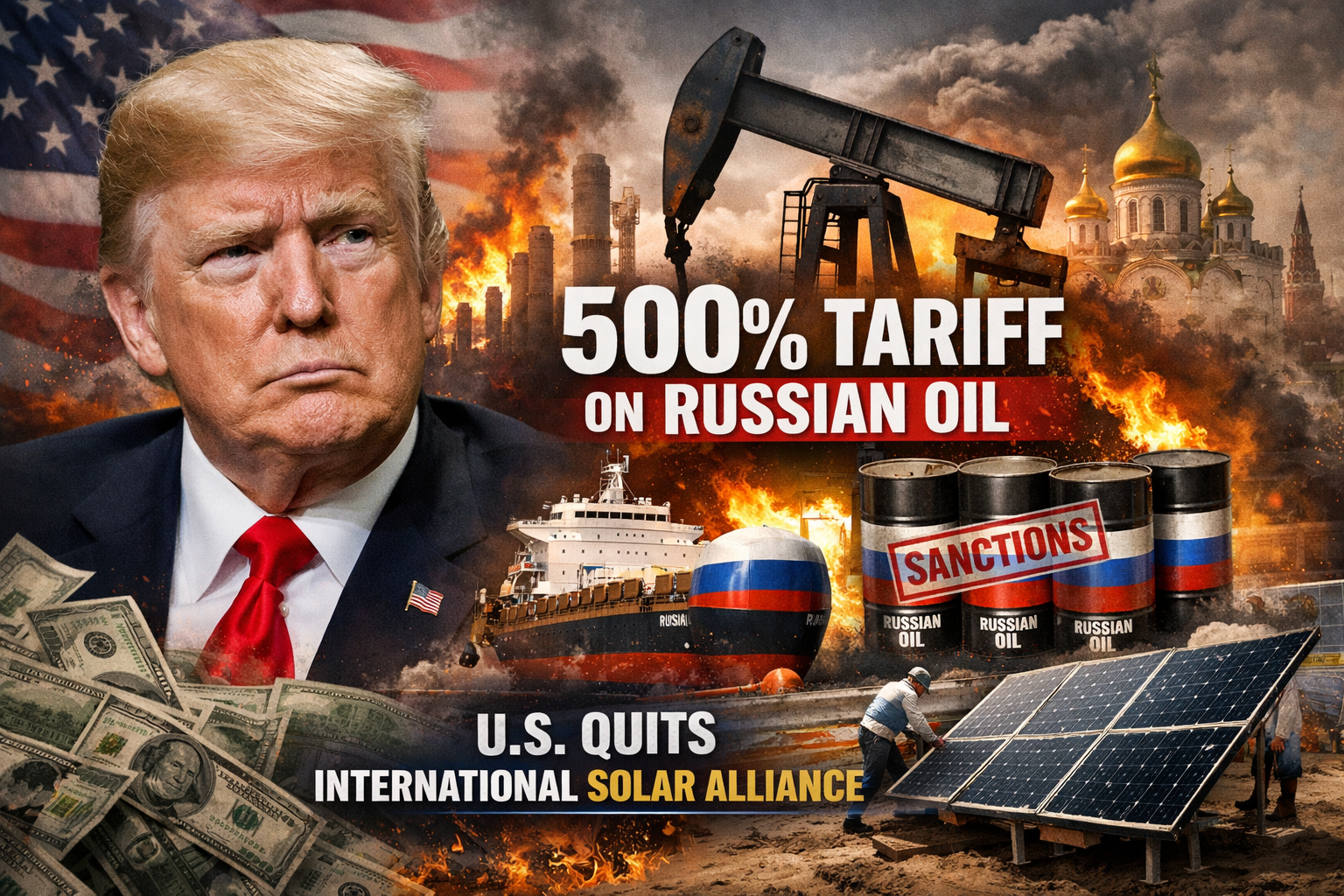
In a major geopolitical and economic development, former U.S. President Donald Trump has approved a sweeping 500% tariff bill on Russian oil imports while simultaneously announcing the United States’ withdrawal from the India-led International Solar Alliance (ISA). The twin decisions signal a sharp shift in U.S. foreign and trade policy, drawing global attention just days ahead of the anticipated arrival of the U.S. Ambassador in New Delhi.
The move is being seen as part of a broader strategy to intensify economic pressure on Russia while redefining America’s participation in multilateral climate and energy initiatives.
500% Tariff on Russian Oil: A Hardline Economic Measure
The approval of the 500% tariff on Russian oil marks one of the harshest trade penalties ever proposed by the United States against Moscow. The bill aims to discourage the purchase of Russian crude by imposing extremely high import duties, effectively making Russian oil economically unviable for U.S. buyers and allied markets.
Policy analysts say the tariff is designed to:
- Cut off Russia’s energy revenue streams
- Reduce global dependence on Russian oil
- Force a restructuring of energy supply chains
The decision comes amid ongoing geopolitical tensions involving Russia and is expected to have ripple effects across global oil markets. Energy traders anticipate short-term volatility in crude prices as markets react to the announcement.
Timing Raises Diplomatic Eyebrows
The timing of the announcement is particularly significant. The approval of the tariff bill comes just ahead of the U.S. Ambassador’s expected diplomatic engagement, raising questions about its broader diplomatic intent.
Experts suggest the move could be aimed at sending a strong political message ahead of strategic discussions with key partners, including India and other emerging economies that maintain energy ties with Russia.
While the U.S. administration has not officially linked the tariff decision to upcoming diplomatic meetings, the timing has sparked intense debate among foreign policy observers.
U.S. Exit from India-Led International Solar Alliance
Alongside the tariff approval, the Trump administration has also confirmed that the United States will withdraw from the International Solar Alliance (ISA), a global solar energy initiative launched by India and France to promote renewable energy adoption, particularly in developing nations.
The ISA currently includes more than 100 member countries and focuses on:
- Expanding solar infrastructure
- Mobilizing solar financing
- Reducing dependence on fossil fuels
The U.S. withdrawal represents a major policy reversal, as previous administrations had supported multilateral climate and clean energy collaborations.
Reasons Behind the ISA Withdrawal
According to sources familiar with the decision, the withdrawal stems from the administration’s belief that:
- Multilateral climate alliances impose constraints on national policy
- Domestic energy priorities should take precedence
- Renewable initiatives should be driven by market forces rather than global frameworks
Supporters of the move argue that exiting the ISA allows the U.S. to redirect resources toward domestic energy innovation. Critics, however, warn that the decision could weaken global solar cooperation and reduce America’s influence in renewable energy leadership.
Impact on India-U.S. Relations
India, as the founding force behind the International Solar Alliance, is expected to closely evaluate the implications of the U.S. decision. While trade and defense cooperation between India and the U.S. remain strong, experts believe the withdrawal from ISA could create temporary friction in climate and sustainability cooperation.
However, diplomatic analysts emphasize that India-U.S. relations are multi-dimensional and unlikely to be derailed by a single policy shift. Both countries continue to collaborate on technology, defense, and strategic security matters.
Global Energy Market Reaction
The combined impact of the Russian oil tariff and the ISA exit could reshape global energy dynamics. Market analysts predict:
- Increased demand for Middle Eastern and U.S. oil
- Greater energy price fluctuations in the short term
- Slower momentum for international solar financing
Developing countries that rely on ISA-backed solar projects may face funding uncertainties if major contributors scale back participation.
Political Reactions and Criticism
The decisions have triggered mixed reactions across political and environmental circles.
Supporters say:
- The tariff strengthens America’s economic stance against Russia
- The ISA exit protects national sovereignty
- U.S. energy independence will improve
Critics argue:
- The tariff could increase fuel costs globally
- Climate leadership may suffer
- Withdrawal from ISA undermines global renewable goals
Environmental groups have expressed concern that stepping away from global solar initiatives could slow progress in combating climate change.
What Happens Next?
The 500% tariff bill is expected to move through legislative and regulatory processes, with implementation timelines likely to be clarified in the coming weeks. Meanwhile, the U.S. exit from the ISA will take effect following formal diplomatic notifications.
Global leaders, energy markets, and climate organizations will be closely monitoring the consequences of these decisions as they unfold.
Conclusion
The approval of a 500% tariff on Russian oil and the withdrawal from the India-led International Solar Alliance mark a significant recalibration of U.S. energy and foreign policy under Donald Trump. While the measures reinforce a tough stance on Russia and multilateral commitments, they also raise important questions about global energy cooperation and climate leadership.
As diplomatic engagements continue and markets respond, the full impact of these decisions will become clearer in the months ahead.
[…] total of 260 vacancies are distributed across different branches and cadres as […]